Targeted chemical solutions for rapid orthophosphate precipitation and high-density sludge compaction in Port Moresby wastewater treatment facilities.
Port Moresby, as the chief economic hub and primary maritime gateway of Papua New Guinea (PNG), faces unique hydro-environmental challenges. With expanding urban populations, intensified food processing operations (notably fish canning and beverage production), and mining-related logistical activity, nutrient pollution—specifically excess phosphorus loading—has emerged as a critical point of environmental regulation and municipal management.
Effluent discharge into the coastal waters of Fairfax Harbour and adjacent marine zones demands stringent control over Total Phosphorus (TP) levels. High ambient temperatures, seasonal monsoonal rainfall, and sensitive tropical marine ecosystems render Port Moresby waters particularly vulnerable to rapid algae blooms, hypoxia, and severe eutrophication. As a world-leading chemical manufacturer with an annual production exceeding 1 million tons, Smedic Technology Co., Ltd. supplies high-performance inorganic coagulants and specialized polymers tailored to meet PNG’s rigorous environmental standards under the Conservation and Environment Protection Authority (CEPA).
Understanding the multi-stage chemical binding pathways essential for achieving sub-ppm phosphorus discharge targets in tropical wastewater systems.
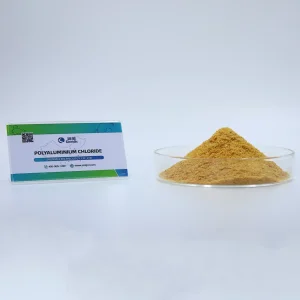
Our advanced PAC formulations ($Al_n(OH)_mCl_{3n-m}$) utilize high-basicity polynuclear aluminum complexes ($Al_{13}$ Keggin ions). The chemical mechanism relies on rapid charge neutralization followed by co-precipitation of insoluble aluminum phosphate ($AlPO_4$). In high-temperature tropical waters such as Port Moresby, high-basicity PAC minimizes alkalinity consumption, avoiding sharp drops in wastewater pH.
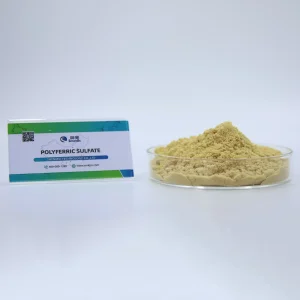
Polyferric Sulfate ($[Fe_2(OH)_n(SO_4)_{3-n/2}]_m$) delivers multi-nuclear hydrolysis complexes that excel in deep phosphorus binding. The ferric ions hydrolyze into dense, fast-settling precipitates ($FePO_4$) that adsorb dissolved organic phosphorus compounds. PFS provides superior sludge dewatering characteristics, reducing final sludge volume by up to 25% compared to conventional alum.
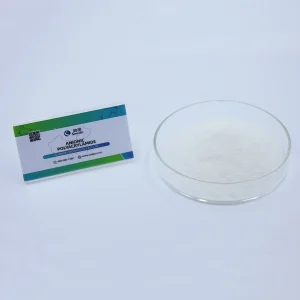
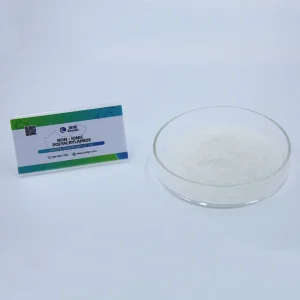
Following inorganic chemical precipitation, high-molecular-weight Polyacrylamide (PAM) bridges fine micro-flocs into massive macro-flocs. Anionic Polyacrylamide (APAM) anchors positive ferric/aluminum-phosphate complexes, while Cationic Polyacrylamide (CPAM) facilitates sludge conditioning for belt presses and centrifuges across municipal and industrial sludge dewatering units.
| Chemical Agent Category | Target Phosphorus Species | Optimal pH Range | Sludge Production | Tropical Shelf-Life Stability |
|---|---|---|---|---|
| High-Basicity PAC (28-30%) | Orthophosphate, Polyphosphate | 6.0 - 8.5 | Moderate / Compact Flocs | High (Resistant to heat degradation) |
| Deep Multi-Nuclear PFS (21%) | Soluble Reactive P, Organophosphorus | 5.0 - 9.0 | Low / Rapid Settling Densities | Very High (Dry Powder Form) |
| High MW APAM Flocculant | Suspended Precipitate Aggregates | 6.0 - 10.0 | Minimizes Sludge Moisture | 24 Months (Sealed Dry Storage) |
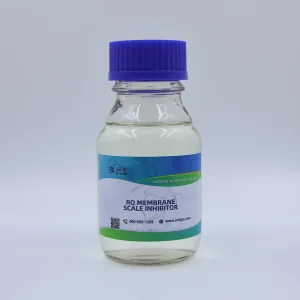
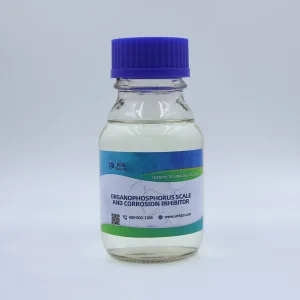
| Organophosphorus Inhibitors | Scale Formation (Industrial Cooling) | 7.0 - 10.5 | Zero Sludge (Scale Inhibition) | Excellent Chemical Stability |
Importing specialized water treatment chemicals into Papua New Guinea requires dedicated logistical coordination, ocean freight reliability, and tropicalized packaging. Smedic Technology operates centralized warehousing and maritime export protocols tailored for direct transit to Motukea Port (Port Moresby).
Smedic Technology Co., Ltd. (established in 2011) operates as a National Specialized, Refined, Unique and Innovative "Little Giant" Enterprise. Backed by an academic R&D network including Tsinghua University Association of Senior Scientists and Technicians, Shandong University, and Beijing University of Technology, Smedic provides:
Our engineering team provides comprehensive jar testing, chemical dosage calculation, and customs-ready export handling for municipal plants and industrial facilities throughout Papua New Guinea.
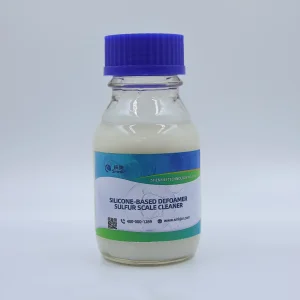
Send Inquiry NowComprehensive environmental agents engineered for municipal sewage, heavy industrial wastewater, defoaming, and membrane scale prevention.
Innovating environmental chemistry to meet future PNG industrial expansion and marine environmental targets.
Transitioning Port Moresby plants from fixed-rate dosing to real-time, sensor-driven dosing systems. By linking online orthophosphate analyzers with automated PAC feed pumps, operators achieve consistent sub-0.5 mg/L TP limits while reducing raw chemical consumption by up to 22%.
Deploying multi-core organic-inorganic hybrid flocculants that dramatically reduce primary sludge mass. Reduced sludge generation directly lowers municipal handling, dewatering, and disposal costs in Port Moresby landfill sites.
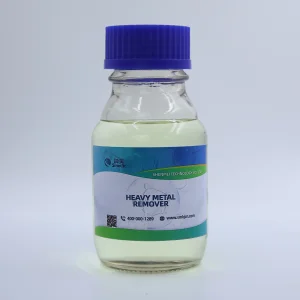
Combining biological nutrient removal (BNR) with tertiary chemical polishing utilizing Smedic Heavy Metal & Fluoride Removal Agents to ensure total compliance in delicate coastal environments near Fairfax Harbour and local river basins.
Technical guidance for plant engineers, procurement managers, and environmental specialists operating in Papua New Guinea.
High-basicity Polyaluminum Chloride (PAC, 28-30%) and Polyferric Sulfate (PFS) are optimal for tropical climates. PAC operates efficiently across temperature ranges from 20°C to 45°C without decomposing or altering process pH drastically, preserving biological basin stability.
We manage FOB, CFR, and CIF shipments direct to Motukea Port. All goods are packed in export-grade moisture-barrier bags, palletized, and shrink-wrapped with heat-resistant plastic to withstand maritime humidity and transit handling.
Typically, a stoichiometric ratio of 1.5 to 2.5 moles of Al³⁺ or Fe³⁺ per mole of soluble orthophosphate is required. For influent TP levels of 8-12 mg/L, a PAC dosage of 40-80 mg/L coupled with 0.5-1.5 mg/L APAM yields residual TP under 0.5 mg/L.
Yes. Our chemical agents are produced under rigorous ISO 9001 and ISO 14001 quality controls. Full non-toxic certification and environmental assessment compliance records are provided for local CEPA permitting.
PFS forms larger, denser flocs that settle significantly faster than alum flocs. Furthermore, PFS operates effectively across a broader pH spectrum (5.0-9.0) and leaves zero residual aluminum ions, which is vital for marine eco-system preservation around Port Moresby.
Stored in unopened, original moisture-sealed bags inside covered warehousing, Smedic PAM maintains full flocculation activity for up to 24 months. Aqueous solutions should be prepared fresh and consumed within 24-48 hours.
Contact Smedic Technology Co., Ltd. today for technical datasheets, free sample dispatch to Port Moresby, and custom chemical synthesis.
Send Inquiry Now Smedic Tech