Optimized chemical agents engineered for municipal sewage, reverse osmosis systems, and industrial wastewater treatment complexes.
In modern manufacturing, processing, and municipal operations, cooling water circuits, boiler networks, and reverse osmosis (RO) systems represent the foundational vascular systems of heavy industry. However, these systems are constantly challenged by thermodynamic forces that drive precipitation scaling and electrochemical corrosion. Without optimal chemical intervention, heat exchangers suffer from thermal resistance buildup, pipelines face localized pitting corrosion, and membranes fail prematurely due to high crystallization scaling.
As a leading global OEM corrosion and scale inhibitor manufacturer and supplier, Smedic Technology addresses these challenges at their physical-chemical roots. By designing custom organophosphorus, polymer, and eco-friendly phosphate-free inhibitor matrices, we enable heavy industries to maintain design thermal efficiency, eliminate unplanned mechanical downtimes, and lower the Total Cost of Ownership (TCO) of complex water networks.
Even a 1mm calcium carbonate or silica scale layer can act as an insulating blanket, reducing thermal transfer efficiency by up to 20-30% and significantly escalating energy footprints.
Under-deposit corrosion creates anode-cathode regions, generating localized pitting that breaches carbon steel and copper pipes faster than uniform thinning.
Irreversible crystallization of sulfate and silicate scale on RO membranes leads to feed-pressure spikes, salt passage increase, and high replacement costs.
Established in 2011, Smedic Technology Co., Ltd. has evolved from a specialized domestic chemical supplier into a major multinational environmental protection agent solutions provider. We strategically integrate cutting-edge R&D, smart production, direct sales channels, and engineering technical service teams.
Our comprehensive agent portfolios cover municipal sewage treatment, industrial wastewater recycling, municipal tap water systems, advanced mineral separation chemistry, and deep oilfield chemicals. Offering over 80 environmental agent varieties, Smedic's production operations are engineered for scalability, achieving an annual capacity exceeding 1 million tons of premium chemical agents.
Our administrative headquarters is strategically located in Beijing, managing our regional sales and engineering divisions. Smedic's primary manufacturing strength comprises wholly-owned industrial chemical production bases positioned across Hebei, Guizhou, and Shanxi provinces. To optimize national distribution and slash international logistics lead times, we run more than ten OEM partner plants and logistics hubs in Shandong, Shanxi, Anhui, Guangxi, and Sichuan.
Currently, Smedic's chemicals treat water in over 600 urban municipal sewage plants and optimize utility assets for more than 1,000 corporate end-users across mining, power generation, refining, and oil field sectors.
Rigorous science and official national standards back every batch of Smedic inhibitors.
Smedic's innovation engine relies on a core technology team composed of academicians, PhD water chemistry researchers, and senior engineers. We operate a "one academy, three research institutes, five production bases" framework, including Hebei Province Advanced Water Treatment Chemicals Technology Innovation Center and Cangzhou Water Engineering Center.
We manage a dedicated expert workstation alongside the Tsinghua University Association of Senior Scientists and Technicians, alongside joint laboratory platforms with Shandong University and Beijing University of Technology.
With over 60 utility and invention patents granted under Chinese national IP guidelines, Smedic is a major driver of sector standards. We have spearheaded the drafting of more than 10 national and industry chemical standards, covering organic composite carbon sources, coagulants, sodium acetate compounds, and denitrifying bacterial agents.
Our independently developed "Inorganic-Organic Covalent Bond Flocculant" received the 22nd China Patent Award and First Prize for Technological Invention from the China Petrochemical Industry Association.
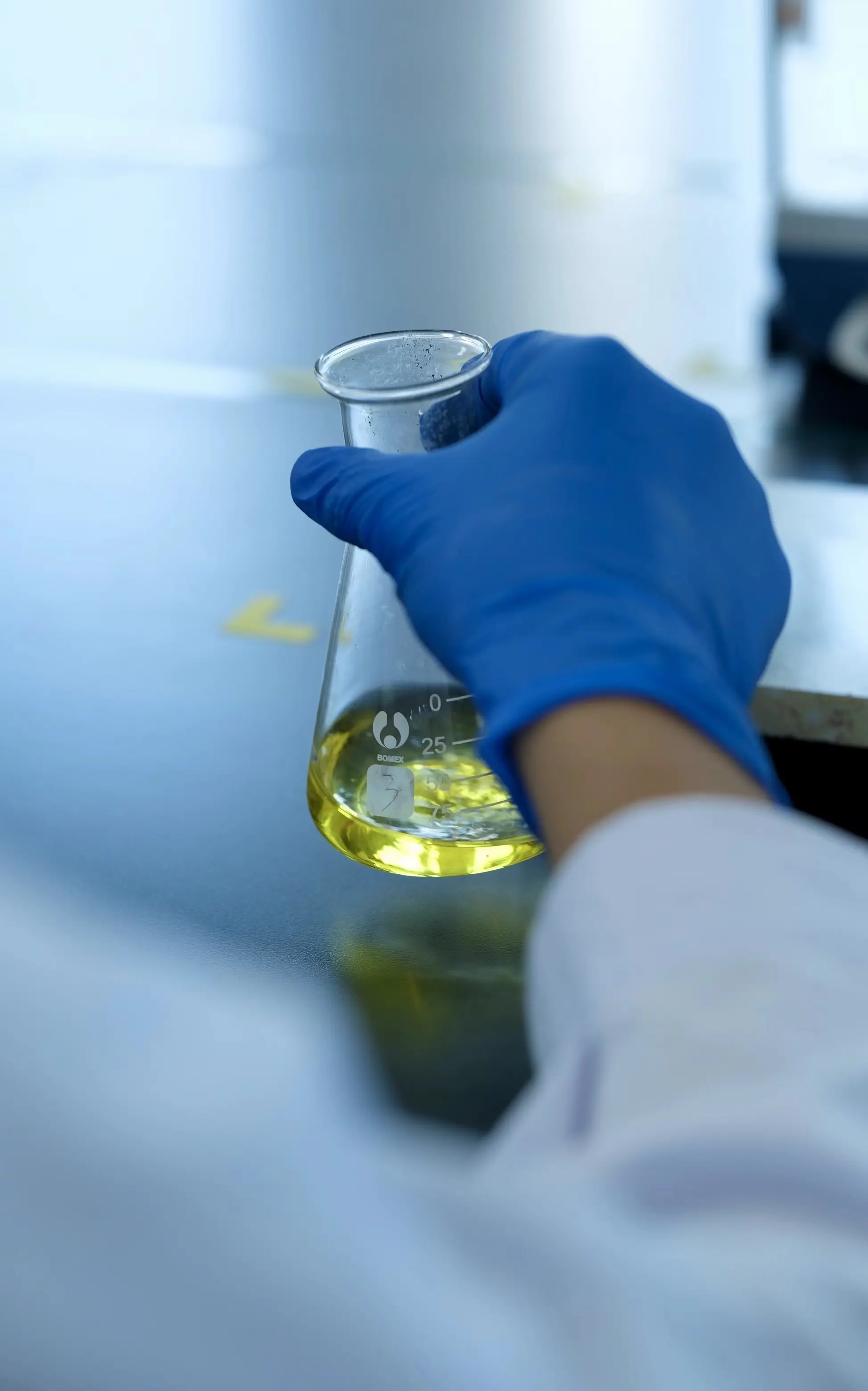
Leveraging the world’s most integrated chemical manufacturing ecosystem for cost and performance advantages.
China is home to the world's most robust phosphorus value chain, the feedstock foundation for critical phosphonate inhibitors (such as HEDP, PBTC, and ATMP). This keeps chemical material supply stable and insulation from global market shocks.
Modern Chinese plants leverage DCS (Distributed Control Systems) automated batch synthesis. Real-time controls on polymerization temperature and raw reactant addition yield high-purity, uniform polymers with low free-monomer residuals.
Operating a facility like Smedic with an annual output exceeding 1 million tons allows for massive unit cost reduction, direct volume shipping contracts, and highly competitive pricing margins for OEM brand owners.
Under China’s modernized industrial framework, green chemical production is mandated. Smedic plants are certified National Green Factories. We conduct full lifecycle monitoring, including VOC extraction, wastewater zero-discharge schemes, and heavy-metal filtration. Every batch bound for the international market is backed by detailed certificate of analysis (COA) protocols, safety data sheets (SDS) aligned with GHS, and pre-registration support for major market frameworks like Europe's REACH.
In scaling systems, crystallization begins when ionic concentrations exceed their solubility limit, triggering nucleation (most commonly Calcium Carbonate, Calcium Sulfate, or Silica). Corrosion, conversely, is an electrochemical degradation of metallic surfaces exposed to water. Smedic's formulations address these dual threats via multiple scientific mechanisms:
Sub-stoichiometric concentrations of phosphonates (like HEDP, ATMP) adsorb onto crystal nuclei, distorting their lattice structure. This prevents orderly growth, rendering the crystals unable to adhere to heat exchanger surfaces.
Polycarboxylic acid polymers (such as PAAS, HPMA) impart a negative electrical charge onto suspended micro-particles, causing electrostatic repulsion that maintains solids in a dispersed state, preventing agglomeration.
Corrosion inhibitors form thin passivating films directly on metal boundaries. Zinc salts and phosphates act as cathodic inhibitors blocking oxygen reduction, while phosphonates or azoles act as anodic barriers preventing iron dissolution.
To combat eutrophication in sensitive water bodies, Smedic engineers biodegradable options based on Polyaspartic Acid (PASP) and Polyepoxysuccinic Acid (PESA), offering scale control without adding nutrient loads to wastewater streams.
| Active Ingredient Class | Primary Target Compounds | Thermal Stability Range | Eco-Impact Rating | Typical Industrial System Application |
|---|---|---|---|---|
| Phosphonates (HEDP/PBTC) | CaCO3, CaSO4, Zn Scale | Up to 250°C | Moderate (Contains Phosphorous) | Open circulating cooling towers, high-pressure boilers. |
| Acrylic Copolymers (AA/AMPS) | Calcium Phosphate, Zinc Scale | Up to 200°C | Low (Highly stable polymer) | High-stress industrial cooling systems, RO pretreatment. |
| Polyaspartic Acid (PASP) | CaCO3, Barium/Strontium Sulfate | Up to 120°C | Excellent (Biodegradable) | Ecologically sensitive cooling towers, municipal water. |
| Polyepoxysuccinic Acid (PESA) | Calcium Carbonate, Calcium Sulfate | Up to 150°C | Excellent (Phosphate-free) | High-hardness RO membrane descaling, oil reinjection loops. |
Customizing water chemistry formulations to meet the specific requirements of target industrial sectors.
Challenge: Massive quantities of heat must be rejected via cooling towers under high Cycles of Concentration (CoC).
Solution: Multipolymer-phosphonate blends designed to stabilize calcium hardness up to 800 ppm, mitigating scale in copper condenser tubing.
Challenge: Corrosive hydrocarbon contamination risk, fluctuating heat load profiles, and acidic processing conditions.
Solution: Zinc-stabilized phosphonates matched with filming amines to safeguard pipeline systems from cracking under heat flux variations.
Challenge: Extreme concentration polarization at the membrane boundary causing rapid silica and calcium sulfate precipitation.
Solution: High-charge dispersion antiscalants formulated to maintain clear membrane surfaces at up to 85% water recovery ratios.
How Smedic delivers customized products to international water treatment service companies.
Our engineering laboratory analyzes raw water chemistry (pH, TDS, M-alkalinity, calcium hardness) to adjust active polymer concentration levels to matching target ranges.
We provide documentation compliance support, including certified product dossiers, REACH registrations, custom label translations, and country-specific GHS safety sheets.
We pack and ship bulk cargo across various formats, including 25kg bags, 200L polyethylene drums, 1000L IBC totes, and high-volume ISO flexitanks for maximum freight efficiency.
Through our regional storage hubs and integrated ocean freight partnerships, Smedic guarantees reliable logistics execution from our plants directly to international distribution ports.
Expert technical insights answering key procurement and chemistry questions.
Explore our full line of coagulants, defoamers, heavy metal chelators, and polyacrylamides.
 Smedic Tech