10 Tips for Choosing the Best Derusting Agent?

Time:2026-11-09 Author:Liam
0%

Rust rarely announces itself as a major expense. It starts as orange scale around a bolt, a rough patch on a steel frame, or a stubborn stain beneath a coating. Yet corrosion can carry a substantial industrial cost. NACE International’s 2016 IMPACT study estimated the global cost of corrosion at US$2.5 trillion annually, equal to 3.4% of global GDP. It also found that applying existing corrosion-control practices could save 15–35% of those costs. The figures are estimates, not a promise that one product will prevent every failure. Still, they show why surface preparation deserves careful attention.

Choosing a Derusting Agent is not simply a matter of buying the fastest-acting formula. The right choice depends on the metal, rust severity, work setting, and finish required afterward. A product that works well on a small steel bracket may be unsuitable for a coated panel or a delicate component. Dwell time matters. So do rinsing needs, residue, ventilation, and compatibility with subsequent primers. Even a clear label can leave practical questions unanswered; testing a small area first is sensible. This guide examines ten selection points, from chemistry and application method to technical documentation and handling instructions. It draws on established corrosion-control guidance, including NACE’s cost analysis and ISO 8501-1’s visual assessment of steel surfaces. No checklist replaces a qualified inspection, but a careful comparison can help teams avoid wasted product, uneven cleaning, and premature coating failure. Sometimes the best choice is not the strongest one.
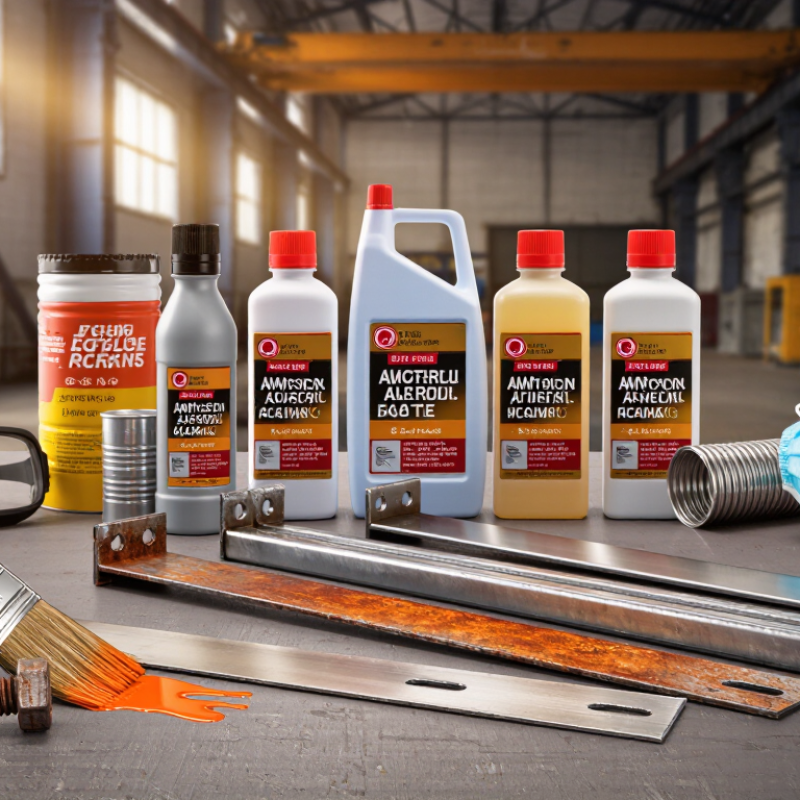
10 Tips for Choosing the Best Derusting Agent?

Identify the Rust Type and Surface Material

Rust is not always the same problem. Loose, orange flakes on a steel gate usually indicate active surface corrosion. Dark marks may be old rust, mill scale, or a failing coating. Look closely before choosing a remover. Deep pits, rough edges, and thinning metal suggest damage that a chemical treatment cannot reverse.

Check the base material, too. Carbon steel and cast iron tolerate some treatments differently from stainless steel, galvanized metal, or aluminum. An acidic deruster may attack zinc coatings, dull aluminum, or discolor a finished surface. Small detail. A magnet can help identify ordinary steel, but it cannot confirm every alloy or coating. Read the product directions for compatible materials, and test a hidden spot first. Watch for bubbling, color change, or a softened finish. Rinse and dry the test area as directed, then inspect it in good light. I have seen people focus on the rust and overlook the thin paint around it. That small oversight can turn a simple cleanup into a refinishing job.

Choosing a Derusting Agent: Match Rust and Surface

Scores are general screening guidance, not measured product-performance data. Acid-based removers can damage aluminum, zinc coatings, and paint; chelating products are often a gentler option when approved for the substrate. Check the product label and test a small area first.

Compare the Main Categories of Derusting Agents

Acid-based derusting agents work quickly on heavy rust, making them useful for steel brackets, tools, and machine parts. They can also attack sound metal or damage coatings if left too long. Check the product instructions, wear suitable protective equipment, and rinse or neutralize the surface as directed. A small test area helps.

Chelating agents bind iron compounds and often remove rust with less aggressive action on the base metal. They may need longer soaking, especially in cold conditions. Water-based neutral cleaners are convenient for light rust and indoor work, but the cleaned surface can flash-rust if it stays damp. Dry it promptly. Rust converters are different: they react with remaining rust to form a paintable layer rather than removing every trace. That distinction is easy to miss. Mechanical brushing may still be needed on flaky areas.

Compare the rust depth, metal type, finish, and available cleanup method before choosing. For example, a thin rusty washer may tolerate a short acid treatment, while a plated fastener could lose its finish. I would not assume one category is best for every job; even a mild agent can disappoint when the rust is thick or the surface is poorly prepared. Check compatibility on an inconspicuous spot, then follow the stated contact time.

Check Compatibility with the Item and Its Finish

A derusting agent must suit both the base metal and its finish. A product safe for bare steel may dull chrome, soften paint, or stain aluminum. Read the label for material limits, contact time, and rinse instructions. Then test a small, hidden area. Wait until it dries; some damage appears later.

Check nearby parts, too. A steel fastener may sit beside a painted panel, rubber seal, or plated trim. Apply the agent with a cotton swab, not a broad spray, and keep it off vulnerable surfaces. For mixed materials, choose a formula explicitly approved for each exposed surface. If the finish is valuable or unknown, stop and ask a conservation or coatings professional. Guessing is tempting. It is not a test.

Compatibility also supports corrosion control. NACE International’s 2016 IMPACT study estimated corrosion costs at US$2.5 trillion annually, or 3.4% of global GDP, and said better practices could save 15–35%. Those figures concern corrosion broadly, not derusting products specifically. Still, they show why preventing fresh damage matters.

Record the test area, dwell time, and visible changes; a quick photo helps compare results. Minor clouding is easy to overlook. Don’t rush.

Evaluate Safety, Application Method, and Cleanup Needs

10 Tips for Choosing the Best Derusting Agent?

Evaluate Safety, Application Method, and Cleanup Needs

Choosing a derusting agent means judging the whole job, not just how quickly rust disappears. Check the safety data sheet for skin and eye hazards, ventilation needs, and required protective equipment.

The 2016 NACE International IMPACT study estimated corrosion costs at US$2.5 trillion annually, or about 3.4% of global GDP. That makes careful maintenance worthwhile, but speed alone is a poor selection test. Small details matter.

Tip 1: Match the application method to the surface.

A gel can cling to a vertical bracket; a liquid may suit a removable bolt or immersion tank. Check compatibility with the metal, coatings, and nearby seals. Test a small hidden area first. Follow the stated dwell time, then inspect with a suitable brush. Longer is not always better.

Tip 2: Plan cleanup before opening the container.

Check whether the instructions call for rinsing, wiping, neutralizing, or drying, and prepare collection materials. Residue in a seam can encourage renewed corrosion; trapped rinse water can also cause trouble. Use the specified protective equipment, manage washings according to product instructions, and dry the part fully. Then inspect again. The least messy option may still require more work than expected.

Choose an Agent Based on Performance and Project Requirements

A derusting agent should fit the surface, rust condition, and work plan—not just promise fast results. A gel may cling to a vertical steel frame, while a liquid can cover broad, accessible parts more evenly. Check the technical data sheet for compatible metals, application temperature, dwell time, and rinse requirements. Small details matter. A residue that remains in a seam can interfere with primer adhesion.

The NACE International IMPACT study estimated corrosion costs at US$2.5 trillion globally, or 3.4% of global GDP, in 2013. It also estimated that better corrosion management practices could save 15–35% of those costs. These figures describe corrosion management broadly, not savings from any single chemical treatment. Still, they show why choosing by project conditions matters. For a workshop repair, consider ventilation, worker protection, and waste handling. For a large outdoor structure, consider coverage rate, runoff control, and access to every corroded area.

Before treating the full surface, test a small patch. Note how quickly rust loosens, whether the metal changes appearance, and how much rinsing is needed. Then check whether the cleaned surface can be primed within the planned window. A product that removes rust quickly may still create extra preparation work. I would not rely on speed alone; actual results can vary with rust depth, temperature, and surface geometry. The best choice is the one that meets the project’s performance needs without adding avoidable steps.

10 Tips for Choosing the Best Derusting Agent: Choose an Agent Based on Performance and Project Requirements
No. Selection Factor What to Check Typical Guidance Project Requirement to Confirm
1 Rust Severity Assess rust thickness, coverage, and whether loose scale is present. Remove loose scale mechanically before chemical treatment. Heavy corrosion may need a stronger or longer treatment, followed by close inspection. Required cleanliness, surface profile, and whether the part can be cleaned in multiple stages.
2 Base-Metal Compatibility Identify the substrate, including steel, cast iron, aluminum, copper alloys, or mixed-metal assemblies. Acidic agents can attack some metals as well as rust. Confirm compatibility for the exact alloy; use a small test area when uncertain. Substrate alloy, coatings, inserts, fasteners, and any dissimilar metals in contact.
3 Agent Chemistry Review the active chemistry and its intended application in the product technical data and safety data sheets. Acid-based products dissolve rust; chelating products bind iron ions and may be suitable for controlled soaking. Performance depends on formulation and conditions. Whether the job requires fast treatment, immersion, localized application, or reduced attack on the base metal.
4 Removal Method Check whether the agent is intended for immersion, brushing, spraying, or use in a recirculating system. Immersion can provide more uniform contact on removable parts. Gel or paste products can help keep treatment localized on vertical surfaces. Part size, geometry, accessibility, available tanks, and control of runoff.
5 Material and Surface Finish Determine whether the surface must retain dimensions, a polished finish, or a particular texture. Test on a representative area: chemical cleaning may affect the finish, and aggressive mechanical preparation can change surface profile. Dimensional tolerances, appearance requirements, and preparation requirements for the next coating.
6 Treatment Time and Temperature Follow the supplier’s specified concentration, temperature, and contact-time range. Warmer or more concentrated solutions can change reaction rates and material attack. Do not assume that extending treatment is harmless. Available processing time, temperature control, and ability to monitor the part during treatment.
7 Rinsing and Residue Check the required rinse procedure and whether neutralization or drying steps are specified. Remove residues according to the product instructions. Dry cleaned steel promptly when needed to limit flash rust before protection is applied. Water quality, drainage, drying equipment, and the time between derusting and coating.
8 Post-Treatment Protection Plan how the cleaned metal will be protected from renewed corrosion. Depending on the next process, apply a compatible primer, coating, oil, or temporary rust preventive after the specified preparation steps. Indoor or outdoor service, exposure conditions, storage duration, and coating-system requirements.
9 Worker and Facility Safety Review hazards, ventilation, personal protective equipment, storage, and spill-response instructions. Use the current safety data sheet and site procedures. Acidic products may present corrosive hazards; never mix chemicals unless the instructions explicitly allow it. Operator training, ventilation, compatible containers, emergency equipment, and local workplace rules.
10 Waste and Total Project Cost Consider bath life, replenishment, rinse water, spent solution, and disposal requirements. Compare total process cost rather than purchase price alone. Spent chemicals and rinse water may require treatment or regulated disposal. Expected throughput, waste-handling capacity, applicable environmental rules, and supplier technical support.

Selection note: Always verify the product instructions and safety data for the specific agent, substrate, and process. Conduct a controlled compatibility test before treating valuable or critical components.

FAQS

How can I tell whether rust is active or old?

Loose orange flakes often indicate active surface corrosion. Dark marks may be old rust, mill scale, or failing coating. Deep pits and thinning metal suggest damage a chemical treatment cannot reverse.

Can I use the same rust remover on every metal?

No. Treatments may affect steel, stainless steel, galvanized metal, aluminum, and cast iron differently. Check the directions for compatible materials. Test a hidden spot first.

How should I check whether a finish is compatible?

Apply a small amount with a cotton swab. Watch for bubbling, color changes, or softened paint. Let the spot dry before inspecting it in good light. Some damage appears later.

What should I do if the item has mixed materials?

Check nearby parts, such as rubber seals, plated trim, and painted panels. Keep the treatment off vulnerable surfaces. If a finish is valuable or unknown, consult a qualified professional.

Should I choose a gel or a liquid treatment?

A gel may cling to a vertical frame. A liquid can cover broad, accessible parts evenly. Choose based on the surface and work plan, not just speed.

What details should I check before applying a treatment?

Read the technical information for application temperature, contact time, compatible metals, and rinsing instructions. Residue left in a seam may interfere with primer. Small details matter.

How can I tell whether the treatment suits my project?

Test a small patch and note how quickly the rust loosens, any surface changes, and rinsing needs. Check whether the cleaned metal can be primed on schedule. Results can vary.

What should I consider when treating a large or indoor area?

Plan for ventilation, worker protection, and waste handling indoors. Outdoors, consider coverage, runoff control, and access to each corroded area. I might still overlook a narrow seam. Inspect it twice.

Conclusion

Choosing the right Derusting Agent begins with identifying both the type of rust and the material beneath it. Light surface rust, heavy corrosion, and rust in hard-to-reach areas may call for different approaches. Consider whether the item is made of steel, iron, or another material, and check whether it has paint, plating, or a delicate finish that could be affected.

Compare the available categories, such as liquid, gel, or mechanical-action products, and confirm compatibility with the item before use. Review safety instructions, ventilation needs, application tools, working time, and cleanup requirements. The best choice is not necessarily the strongest option: match performance to the project’s scale, location, and desired finish, while considering convenience and the care needed afterward.


Liam

Liam

Liam is a dedicated marketing professional with a profound expertise in the industry, where he excels at highlighting the unique advantages of our core products. With a keen understanding of market trends and consumer needs, Liam frequently updates our company’s professional blog, providing......