Top Ferrous Sulfate Pills Suppliers for Global Buyers
Global demand for iron supplementation remains substantial. The World Health Organization reports that anemia affects about 30% of women aged 15–49 worldwide. It also affects approximately 37% of pregnant women and 40% of young children. These figures explain the continuing importance of reliable Ferrous Sulfate Pills suppliers.
However, purchasing decisions require more than competitive pricing. The supplier must verify elemental iron content, dissolution performance, microbial limits, packaging integrity, and batch consistency. Buyers should request current Certificates of Analysis, GMP evidence, stability data, and pharmacopeial compliance. USP, BP, and Ph. Eur. standards can support more consistent evaluation across markets.
Market intelligence from Grand View Research and Fortune Business Insights indicates steady growth across the broader iron supplements and pharmaceutical ingredients sectors. Yet market estimates differ. Definitions, regional coverage, and product categories are not always consistent. That detail deserves attention.
Hematologist Michael Auerbach has emphasized, “Oral iron works only when patients can take it consistently.” Tolerability matters. Ferrous sulfate may cause nausea, constipation, dark stools, or abdominal discomfort in some users. Supplier quality cannot eliminate every clinical issue, but accurate labeling and dependable formulation can support responsible use.
This guide examines leading Ferrous Sulfate Pills suppliers for global buyers. It considers manufacturing experience, documentation, quality systems, delivery capability, and transparent communication. A polished website is not enough. Samples, audits, and independent testing may still be necessary.
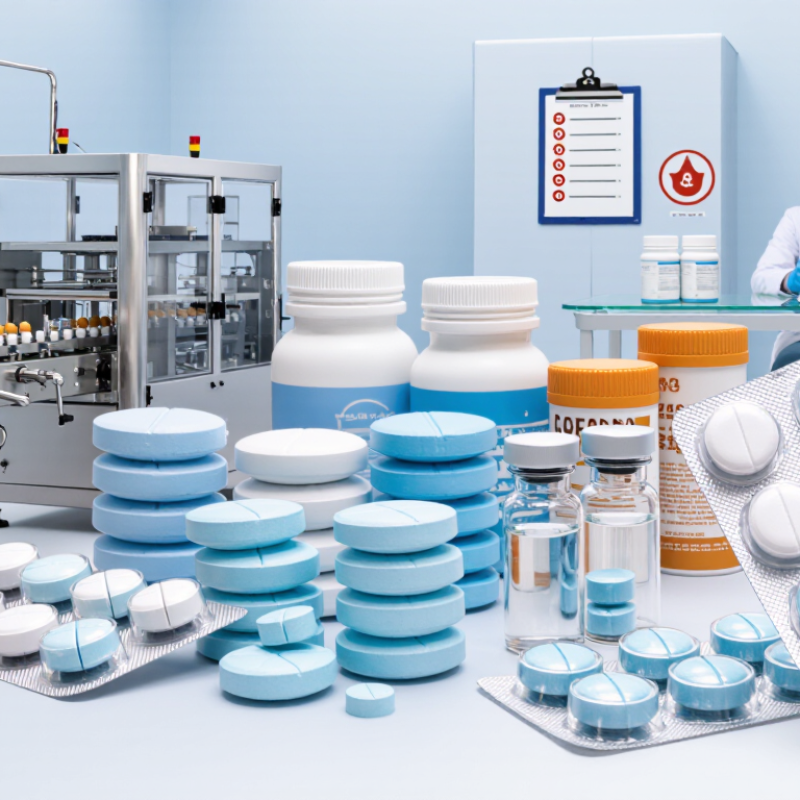
Ferrous sulfate tablets supply iron for preventing or treating iron deficiency when clinically appropriate. The WHO’s 2025 anaemia fact sheet, based on 2019 estimates, reports anaemia in about 30% of women aged 15–49 and 40% of children aged 6–59 months worldwide. These figures show why dependable iron products matter, but they do not mean every anaemia case is caused by iron deficiency. A clinician should guide use, since dose and duration depend on individual needs. Common forms include conventional tablets and modified-release tablets. Their elemental iron content can differ, even when the label lists a similar amount of ferrous sulfate. Small details matter.
For global buyers, quality checks should cover identity, strength, impurities, dissolution, stability, and protective packaging. USP–NF and European Pharmacopoeia monographs provide recognized specifications for pharmaceutical ingredients and dosage forms; buyers should verify the relevant current monograph and finished-product requirements. Request batch-specific certificates of analysis, and check that testing methods and acceptance limits are stated clearly. A tablet can look intact yet fail to release its iron as intended, so visual inspection alone is weak evidence. Supplier audits and traceable records help, though paperwork cannot replace independent testing when risk warrants it. Some sourcing decisions still rely too heavily on price. That deserves a second look.
Top Ferrous Sulfate Pills Suppliers for Global Buyers
Key Factors for Evaluating Global Ferrous Sulfate Suppliers
Global buyers assessing ferrous sulfate pill suppliers should look beyond quoted price. Supplier experience appears in stable batch quality, clear specifications, and practical export records. Ask for active iron content, ferrous sulfate form, tablet strength, excipients, and shelf life. Request recent certificates of analysis, not generic templates. Small details matter. A reliable supplier can explain testing methods, sampling plans, and storage conditions without vague answers.
Quality systems deserve close review. Check whether production follows recognized pharmaceutical or dietary supplement standards applicable to the destination market. Confirm identity, assay, impurities, microbial limits, packaging integrity, and batch traceability. Independent laboratory testing can support supplier documents, especially for a new relationship. Inspect the packaging carefully. Moisture protection, readable lot numbers, expiry dates, and tamper evidence should match approved artwork. Do not rely on polished brochures alone.
Logistics also reveal supplier capability. Compare minimum order quantities, lead times, humidity controls, customs documents, and complaint handling. Ask how deviations are investigated and how recalls are managed. No supplier is perfect. A missing record or delayed reply may expose a deeper weakness, or simply poor communication. Buyers should document risks and consult a qualified local regulatory adviser when requirements differ. This review takes time, but it protects patients, budgets, and future supply.
Theoretical elemental iron content by ferrous sulfate form (weight %). Values are calculated from each chemical formula and standard atomic weights; they are not supplier-specific test results. When evaluating suppliers, confirm the product form, assay, and batch certificate of analysis.
Top Ferrous Sulfate Pills Suppliers for Global Buyers
Reliable ferrous sulfate pill suppliers control quality from raw material intake to final packaging. Manufacturing should follow documented GMP procedures and verified batch records. Workers should check ingredient identity, iron content, tablet weight, hardness, dissolution, moisture, and microbial limits. Stable packaging also matters because humidity can affect tablet performance. Clear traceability helps buyers investigate deviations quickly.
Testing should use validated methods and qualified laboratories. A complete certificate of analysis should match the shipped batch, not a previous production lot. Buyers should review impurity limits, heavy metals, stability data, and shelf-life evidence. Regulatory compliance depends on the destination market, including approved ingredients, labeling language, dosage rules, and registration documents. A polished certificate is not proof by itself. Even experienced manufacturers can miss a documentation detail, so independent review remains valuable.
Tips: Request recent batch records and laboratory results. Confirm that test methods meet applicable pharmacopeial or national requirements. Audit storage conditions, especially temperature and humidity logs. Ask how complaints, recalls, and out-of-specification results are handled. Do not rely only on website claims. Supplier evaluation should include samples, document checks, and direct technical discussions.
Supplier profiles below describe capability types rather than named companies. Requirements vary by destination market and whether the product is regulated as a medicine or a food supplement; verify the applicable product specification and regulatory pathway before purchase.
| Supplier profile | Manufacturing considerations | Testing and release evidence | Regulatory evidence to request | Global buyer checks |
|---|---|---|---|---|
| Finished-dose tablet manufacturer | Confirm the ferrous sulfate form and hydrate state, tablet strength, excipients, coating, batch size, and controls for moisture and oxidation. Elemental iron content depends on the chemical form; for example, ferrous sulfate heptahydrate contains about 20.1% iron by mass. | Request batch-specific identity and assay results, elemental iron content, relevant impurity results, and dosage-form tests such as disintegration or dissolution where required by the product specification or applicable monograph. | For US drug products, verify applicable FDA drug cGMP requirements, including 21 CFR Parts 210 and 211. For EU medicines, verify the applicable EU GMP authorization and manufacturing scope. A certificate alone does not establish approval of a particular product. | Confirm the manufacturing site, product authorization or registration status where required, approved labeling, shelf life, storage conditions, and traceability from raw material to finished batch. |
| Capsule or contract dosage-form manufacturer | Check whether the site can control blend uniformity, fill weight, capsule-shell compatibility, and cross-contamination. Establish who is responsible for sourcing and approving the ferrous sulfate active ingredient. | Review the approved specifications and representative certificates of analysis. Release testing should be defined for identity, assay, dosage-unit consistency, and applicable disintegration or dissolution requirements. | Confirm that the quality system and site authorization match the intended classification and destination market. US dietary supplements are subject to 21 CFR Part 111; US drug products are subject to the applicable drug cGMP rules. | Clarify contract responsibilities, change control, deviation handling, complaint and recall procedures, audit access, and ownership of batch records and product documentation. |
| Dietary-supplement manufacturer | Confirm the product is marketed under the correct food-supplement or dietary-supplement rules in each market. Review ingredient controls, serving-size calculations, label claims, and packaging suitability. | Request documented identity and strength testing, finished-product specifications, and risk-based testing for contaminants. Verify that the stated iron amount is expressed consistently, such as elemental iron per serving. | For US dietary supplements, review compliance with 21 CFR Part 111 and applicable labeling rules. Requirements differ by jurisdiction; supplement status in one market does not automatically establish compliance in another. | Check local notification or registration duties, permitted claims, language and labeling rules, import documentation, and any restrictions on iron levels or intended users. |
| Pharmaceutical-grade sourcing and manufacturing partner | Verify whether the ferrous sulfate raw material meets the exact grade and monograph named in the product specification. Control of raw-material suppliers, hydrate state, storage, and material changes is essential. | Where applicable, request testing against the specified USP–NF, European Pharmacopoeia, or other recognized compendial standard. Confirm that the test methods and acceptance criteria are stated in the approved specification. | Ask for current site and product documentation relevant to the target market, including GMP status and the scope of any inspection or authorization. ICH Q3D elemental-impurity risk assessment may apply to drug products. | Check compendial edition, analytical-method suitability, supplier qualification records, audit findings, and whether any claimed certification covers the specific manufacturing site and activity. |
| Export-oriented finished-product supplier | Assess packaging integrity, batch coding, serialization where applicable, transport conditions, and documented controls for humidity and product stability during shipping. | Review stability data supporting the labeled shelf life and storage statement, along with batch-specific release documentation and procedures for out-of-specification results. | Confirm destination-country requirements for product registration, import permits, certificates, labeling, and language. Export documentation does not replace local product approval where required. | Verify Incoterms, customs classification with a qualified broker, country-of-origin documents, shipping lead times, adverse-event contact details, and a documented recall communication route. |
Buyer note: Request current, batch-specific documentation and verify regulatory status with the relevant authority or qualified regulatory adviser. Standards and legal requirements depend on product classification, formulation, claims, and destination market.
When comparing ferrous sulfate pill suppliers, check the product before comparing the price. Confirm iron strength, tablet count, assay results, dissolution testing, shelf life, and packaging options. Ask for batch-specific certificates and stability data, not only a general product sheet.
WHO’s 2023 anaemia fact sheet reports that anaemia affected about 30% of women aged 15–49 worldwide, based on 2019 estimates. This signals broad public-health need, but it is not a direct forecast of pill orders.
Request prices at several order sizes and compare the same terms: unit price, packaging, testing, freight, and delivery time. Minimum order quantities can vary with tablet production runs and custom packaging; ask whether a smaller trial order is available. Check whether the supplier can provide consistent batch records and clear documentation.
A low quote can still be the wrong quote. Freight and import handling may outweigh small unit-price savings, especially for bulky retail packs. Compare landed cost, not just the factory price.
WHO’s estimate gives useful demand context, not a benchmark for supplier pricing or MOQ. And a polished quote is not proof of reliable production. Ask for recent batch evidence before committing.
Importing ferrous sulfate pills requires more than comparing quoted prices. Buyers should verify the supplier’s manufacturing authorization, quality system, and batch testing records. A current certificate of analysis should identify elemental iron, assay results, impurities, microbiological limits, and batch numbers. Ask for stability data, not only a production sample. Samples can look perfect. Production consistency matters more.
Packaging needs careful review. Ferrous sulfate may be affected by moisture, light, and poor storage conditions. Blister packs can offer strong unit protection, while bottles may require moisture barriers and suitable desiccants. Check seal integrity, tamper evidence, tablet count, and transport cartons. Labels should match the destination market’s language, dosage rules, ingredient declarations, and expiry requirements. Artwork approval often delays shipments.
Supply chain planning should include realistic production time, port congestion, customs documentation, and insurance. Confirm the product classification with a qualified customs broker before shipment. Also request temperature and humidity recommendations for warehousing. A supplier should provide traceability from raw material to finished batch and explain its recall procedure. Third-party inspection can reduce risk before loading, although it cannot replace an effective quality audit. Smaller minimum orders may appear attractive, but they can increase packaging costs and complicate stock rotation. This is easy to overlook. Recheck every assumption against local regulations and actual sales forecasts.
Confirm the iron content, ferrous sulfate form, tablet strength, excipients, tablet count, and shelf life. Small details matter.
Request recent, batch-specific certificates of analysis and stability data. Generic templates are not enough. Recent evidence matters.
Check identity, assay, impurities, microbial limits, dissolution, and batch traceability. Independent laboratory testing can support supplier documents.
Look for moisture protection, readable lot numbers, expiry dates, and tamper evidence. Packaging should match approved artwork.
Compare unit price, packaging, testing, freight, and delivery time under the same terms. A low quote may still cost more overall.
Minimum quantities often reflect production runs or custom packaging. Ask whether a smaller trial order is available.
Ask about lead times, humidity controls, customs documents, and complaint handling. Freight may outweigh small unit-price savings.
Document each risk and request clarification. A delayed reply may reveal weak systems, or poor communication. Both deserve attention.
Ask how deviations are investigated and recalls are managed. Review batch records before committing. No supplier is perfect.
Ferrous Sulfate Pills are used as an iron supplement, and buyers should understand the available forms, dosage strengths, and quality specifications before choosing a supplier. A careful evaluation considers product consistency, manufacturing capacity, documented quality controls, testing for identity and purity, and compliance with applicable requirements in the intended market. Clear technical documentation and reliable communication can help buyers assess whether a supplier is equipped to meet their needs.
Comparing suppliers also involves reviewing pricing, minimum order quantities, production lead times, and the ability to support repeat orders. International buyers should confirm packaging options, labeling details, shelf-life information, and shipping arrangements, while considering how transport and storage may affect product condition. By weighing quality, service, cost, and supply-chain reliability together, buyers can make a more informed decision and establish a dependable sourcing plan.

Smedic Tech