How to Choose Flocculation Chemicals for Your Business?

Time:2026-09-22 Author:Isabella
0%

Choosing Flocculation Chemicals is not a simple product comparison. The right option depends on water quality, suspended solids, pH, temperature, dosage limits, and treatment equipment. A chemical that performs well in one facility may fail in another. Even experienced operators get this wrong.

John Bratby, a respected water-treatment author, offers a useful principle: “There is no universal coagulant.” His point remains practical. Start with a jar test, not a sales brochure. Test several products using the same sample, mixing speed, settling time, and dosage range. Watch the water closely. Does the floc form quickly? Is it dense enough to settle? Does the clarified water look clean under normal lighting?

Field experience matters here. A polymer may create large, visible flocs, yet leave residual particles after filtration. Another product may settle slowly but produce better final water. Small changes in pH can also alter performance. Keep records of every test.

Do not ignore handling requirements. Storage temperature, solution age, feeding equipment, and operator safety can affect results. Ask suppliers for technical data, recommended preparation methods, and independent performance evidence. Verify those claims through controlled trials.

The cheapest chemical is not always the lowest-cost choice. Poor settling can increase sludge volume, filter loading, downtime, and maintenance. That reality is easy to overlook. A careful selection process connects laboratory results with daily operating conditions. This guide explains how to compare Flocculation Chemicals with sound judgment, measurable evidence, and room to question your first result.
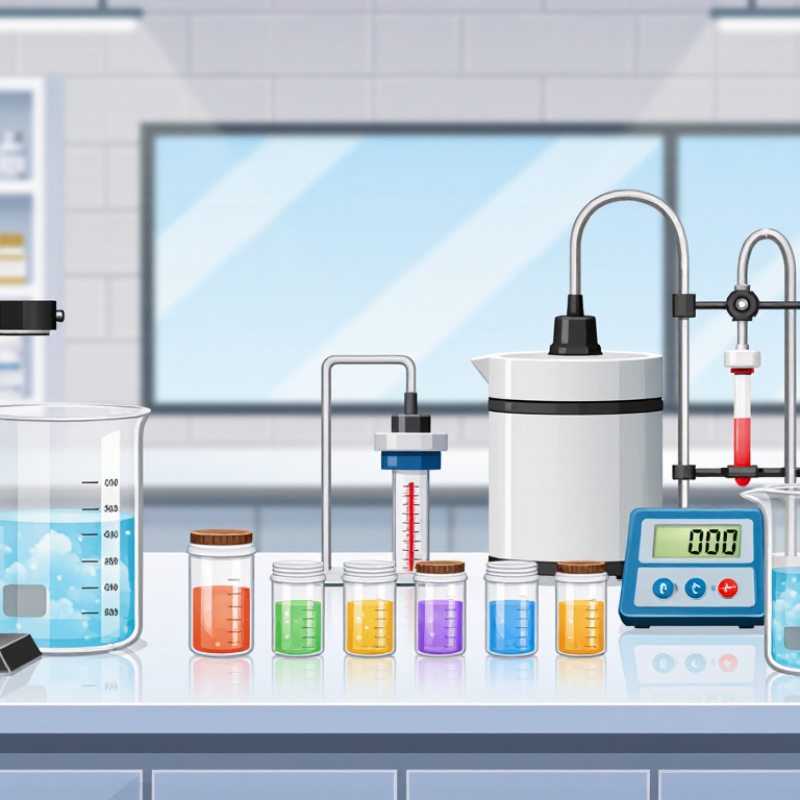
How to Choose Flocculation Chemicals for Your Business?

Understanding Flocculation Chemicals and Their Role in Treatment

Flocculation chemicals help tiny suspended particles join into heavier flocs. These flocs can settle or separate during filtration. Common options include aluminium salts, iron salts, and synthetic polymers. Each reacts differently with pH, alkalinity, temperature, and organic matter.

The World Health Organization recommends treated-water turbidity below 1 NTU for effective disinfection, with 5 NTU as an upper operational limit. This makes chemical selection a process decision, not a purchasing decision. A chemical may remove colour well but create excessive sludge. Another may produce clear water but perform poorly in cold conditions. Small details matter.

< 1 NTU Effective disinfection
5 NTU Upper operational limit

Run jar tests using actual site water. Use one-litre beakers, several dosages, and realistic mixing speeds. Record turbidity, pH, settling time, floc size, and sludge volume. The United States Environmental Protection Agency’s Drinking Water Treatability Database lists aluminium and iron coagulants among established treatment options, but it does not replace site testing. That limitation deserves attention. A dose that works in a laboratory may fail after heavy rainfall, when organic loads change quickly. Review safety data, residual-metal targets, storage requirements, and dosing accuracy before scaling up. Pilot trials are expensive, but blind chemical switching can cost more.

Identifying Your Business’s Water Treatment Requirements

Choosing flocculation chemicals starts with the water, not the product catalogue. Your business may face muddy surface water, oily wastewater, or high-solids process streams. Each condition needs different chemistry. The UN World Water Development Report 2024 states that agriculture accounts for about 70% of global freshwater withdrawals. This makes reliable water reuse increasingly important for farms and food processors.

Define the treatment target clearly. Measure turbidity, pH, temperature, alkalinity, conductivity, suspended solids, and organic content. Record changes during production, not only during quiet hours. A jar test can compare polymer charge, dosage, mixing speed, settling time, and sludge volume. Small details matter. For example, a chemical that settles clay quickly may perform poorly with oily particles. The WHO and UNICEF Joint Monitoring Programme reported that 2.2 billion people lacked safely managed drinking water in 2022. That figure reinforces the need for careful treatment design and responsible chemical control.

Review discharge limits, worker safety, residual chemical requirements, and sludge disposal options before selecting a formulation. Treatability results should guide the decision. Price alone can mislead. A lower dose may create wetter sludge or require longer clarification time. A clear jar is not proof of full-scale success. Field conditions are less tidy. Recheck performance after rainfall, temperature shifts, and changes in raw-water quality. One weakness remains common: many facilities test chemicals only once, then assume the result will last.

Comparing Flocculant Types and Chemical Properties

How to Choose Flocculation Chemicals for Your Business?

Comparing flocculant types begins with water chemistry, not price. Inorganic coagulants, such as aluminum or iron salts, often work well with high turbidity. They can form dense flocs, but may increase sludge volume and alter pH. Organic polymers usually require lower dosages. Their molecular weight and charge density strongly affect floc size, settling speed, and shear resistance. Cationic polymers suit many negatively charged particles, while anionic or nonionic grades may perform better with mineral-rich streams. The right choice depends on suspended solids, alkalinity, temperature, and process flow.

Tips: Run jar tests with actual process water. Test several dosages. Measure settling time, filtrate clarity, pH, and sludge texture. Keep mixing conditions consistent. A small dosing change can create surprisingly different flocs. Ask the supplier for safety data and handling guidance, then verify the results independently.

A reliable evaluation also considers storage stability, preparation time, and equipment compatibility. Powdered products may need careful hydration, while liquid products can simplify dosing. However, convenience is not proof of performance. Operators should monitor seasonal changes because rainfall, production schedules, and temperature can shift water chemistry. One practical mistake is choosing the fastest-settling floc without checking downstream filtration. That choice may create fragile flocs and cloudy filtrate later. Trial records should include chemical concentration, mixing energy, settling depth, and measured results. Even experienced teams sometimes overvalue a single clear sample. Repeated testing is safer.

How to Choose Flocculation Chemicals for Your Business? - Comparing Flocculant Types and Chemical Properties
Flocculant Type Active Chemistry Primary Charge or Mechanism Typical Effective pH Range Typical Starting Dose Main Applications Key Advantages Important Limitations
Aluminum Sulfate (Alum) Al2(SO4)3·xH2O; hydrolyzes to form aluminum hydroxide precipitates Inorganic coagulant; charge neutralization and sweep flocculation Approximately 5.5–7.5 10–100 mg/L Municipal drinking water, wastewater clarification, phosphorus removal Widely available; familiar operating profile; effective for many suspended solids Consumes alkalinity; may lower pH; produces relatively high sludge volumes; residual aluminum must be controlled
Ferric Chloride FeCl3; forms ferric hydroxide precipitates during hydrolysis Inorganic coagulant; charge neutralization, precipitation, and sweep flocculation Approximately 4.0–7.0 5–100 mg/L Wastewater treatment, phosphorus removal, industrial effluent, sludge conditioning Strong performance over a broad range of wastewater conditions; effective phosphorus and sulfide control Highly corrosive; can darken sludge and treated water; consumes alkalinity; may require corrosion-resistant equipment
Polyaluminum Chloride (PACl) Pre-hydrolyzed aluminum-based polymers containing polymeric aluminum species Charge neutralization and adsorption with reduced dependence on in-situ hydrolysis Approximately 5.0–9.0 5–60 mg/L Drinking water, industrial wastewater, color and turbidity removal Often requires less alkalinity than alum; can produce stronger and faster-forming flocs; generally lower sludge volume than alum Performance varies with basicity and formulation; overdosing can restabilize particles; residual aluminum requires monitoring
Cationic Polyacrylamide (CPAM) Water-soluble polyacrylamide with positively charged functional groups Cationic charge neutralization and polymer bridging Approximately 4.0–9.0, depending on charge density and water chemistry 0.5–10 mg/L Sludge dewatering, dissolved air flotation, primary clarification, solids separation Very low dose; forms large, shear-sensitive flocs; often improves sludge capture and dewatering Requires accurate dosing and good mixing control; excessive shear can break flocs; residual acrylamide must meet applicable regulations
Anionic Polyacrylamide (APAM) Water-soluble polyacrylamide containing negatively charged carboxylate groups Polymer bridging and adsorption onto positively charged or mineral-rich particles Approximately 6.0–9.0, depending on hydrolysis level and water composition 0.2–5 mg/L Mining water, mineral processing, inorganic wastewater, sediment control Effective for mineral particles and high-solids streams; can produce dense, fast-settling flocs at low dosage Usually less effective for highly organic or negatively charged particles without a suitable coagulant; sensitive to polymer preparation and shear
Nonionic Polyacrylamide (NPAM) Water-soluble polyacrylamide with low ionic charge Primarily polymer bridging and adsorption Approximately 5.0–8.0 0.2–5 mg/L Mineral processing, neutral suspensions, solids thickening, selected industrial wastewater streams Useful where ionic interactions must be limited; can perform well with low-charge or variable-charge particles Often less powerful than charged polymers for highly colloidal suspensions; requires jar testing to identify a suitable molecular weight
PolyDADMAC Cationic water-soluble polymer based on diallyldimethylammonium chloride Strong cationic charge neutralization with some polymer bridging Approximately 4.0–10.0 0.5–20 mg/L Color removal, drinking water clarification, wastewater pretreatment, sludge conditioning Fast reaction; effective at relatively low doses; available in liquid form and generally easy to feed Can be sensitive to overdosing; may increase dissolved organic or polymer residuals if poorly controlled; product charge density affects performance
Organic Coagulant-Flocculant Blend Blended cationic polymers, polyamines, or polymeric coagulants formulated for specific water characteristics Charge neutralization combined with polymer bridging Approximately 4.0–10.0, depending on formulation 1–50 mg/L Industrial wastewater, oily wastewater, color removal, compact clarification systems Can reduce inorganic chemical use and sludge generation; may work effectively in compact treatment systems Performance is highly formulation-specific; compatibility with downstream biological treatment and discharge limits must be verified
Natural Flocculants Biopolymers such as chitosan, starch derivatives, tannin-based polymers, or cellulose-based materials Adsorption, charge neutralization, and polymer bridging Approximately 5.0–8.0, depending on material and application 1–100 mg/L Selected food, beverage, agricultural, and low-to-moderate strength wastewater applications Renewable feedstock options; may produce biodegradable or lower-toxicity residuals; useful where synthetic polymers are restricted Quality and performance can vary between batches; may have narrower operating conditions; often requires higher dosage or pretreatment
Important selection note: The pH ranges and starting doses are general industry reference ranges, not guaranteed operating values. Actual performance depends on particle size, alkalinity, temperature, organic matter, ionic strength, mixing energy, and treatment objectives. Confirm the final chemical and dosage through jar testing, pilot testing, residual analysis, and applicable drinking-water or discharge regulations.

Evaluating Dosage, Compatibility, Safety, and Cost

How to Choose Flocculation Chemicals for Your Business?

Choosing a flocculation chemical starts with dosage, not price. A small dose may leave cloudy water, while excess chemical can create sticky sludge and increase disposal costs. Run jar tests using your actual process water. Test several doses under the same mixing speed and settling time. Record turbidity, pH, sludge volume, and settling speed. A clear sample is useful, but it is not the only measure. Your operators may notice filter blockage or unstable performance later.

Compatibility matters. The chemical must work with existing coagulants, filters, pumps, and wastewater conditions. Test it across seasonal changes, especially when temperature or pH shifts. Review the safety data sheet before handling trials. Provide suitable gloves, eye protection, ventilation, and clear storage labels. Confirm that the chemical is suitable for your discharge requirements and application. Local rules may vary. Professional advice is still valuable.

Tips: Compare total operating cost, not just the purchase price. Include dosage, delivery, equipment cleaning, sludge handling, worker training, and disposal. Ask for technical data, but challenge laboratory results with a controlled plant trial. Keep written records. They reveal patterns that memory misses. A perfect dose is rarely found on paper. Sometimes, a slightly higher-priced chemical produces less sludge and fewer interruptions. That may be the better business decision, although the result should be verified over several operating weeks.

Testing, Selecting, and Optimizing the Best Flocculant

Choosing a flocculant should begin with testing, not a supplier catalogue. Water chemistry changes with rainfall, temperature, and production cycles. A practical jar test measures turbidity reduction, floc size, settling speed, and sludge volume. Test several dosages around the expected operating range. Record pH and mixing energy carefully. Small differences can change performance sharply.

The 2024 UNESCO World Water Development Report states that agriculture accounts for about 70% of global freshwater withdrawals. This pressure increases demand for efficient clarification and water reuse. Your selection should consider the target water quality, suspended solids, organic content, and discharge requirements. Compare chemical cost per treated cubic metre, not price per kilogram. Include sludge handling and dosing equipment costs. A flocculant that settles particles quickly may create fragile sludge. That is not always a success.

Tips: Use actual process water, not laboratory substitutes. Run duplicate jar tests. Measure results after both five and thirty minutes. Check residual chemical levels where reuse is planned. The U.S. EPA Water Treatability Database supports evaluating treatment variables, but field validation remains essential. I have seen operators over-optimize turbidity while ignoring filter loading. That mistake can raise maintenance costs. Review performance weekly during seasonal changes. Keep one assumption open to challenge. The best dose today may fail after tomorrow’s storm.

FAQS

What do flocculation chemicals do?

They help tiny suspended particles join into heavier flocs. These flocs can settle or separate during filtration. The water becomes easier to clarify.

Which factors affect flocculation performance?

pH, alkalinity, temperature, and organic matter can change chemical performance. Cold water may slow settling. Heavy rainfall can also alter organic loads.

How should the correct dosage be selected?

Start with jar tests using actual process water. Use one-litre beakers and several chemical doses. Keep mixing speed and settling time consistent.

What should a jar test measure?

Record turbidity, pH, settling speed, floc size, and sludge volume. Check the sample after settling. A clear beaker is helpful, but it can mislead.

Why is low turbidity important after treatment?

Lower turbidity supports effective disinfection. A practical target may be below 1 NTU. Conditions still vary, so treatment results need regular checking.

Can laboratory results predict full-scale performance?

Not completely. Laboratory water may not reflect rainfall, temperature changes, or organic matter shifts. Plant trials can reveal unexpected filter blockage or unstable results.

What safety checks are needed before trials?

Review the safety data sheet before handling chemicals. Provide gloves, eye protection, ventilation, and clear storage labels. Confirm suitable discharge requirements and local rules.

How should the real cost be compared?

Compare dosage, delivery, cleaning, sludge handling, training, and disposal costs. A cheaper chemical may create sticky sludge and more interruptions. That assumption deserves testing.

When should a pilot trial be considered?

Consider one when jar tests look promising but operating conditions vary. Run it across several weeks and seasons when possible. Keep written records because memory misses patterns.

Conclusion

Choosing the right Flocculation Chemicals is essential for improving water treatment efficiency, reducing operating costs, and achieving consistent discharge or reuse quality. The selection process should begin by identifying the type and concentration of suspended solids, the water’s pH, temperature, flow rate, and the required treatment outcome. These factors help determine whether a polymeric, inorganic, or blended flocculant is most suitable. Each option should be compared according to charge characteristics, reaction speed, settling performance, storage requirements, and environmental considerations.

Beyond treatment performance, businesses should evaluate dosage control, compatibility with existing equipment and chemicals, worker safety, handling procedures, and total cost. Laboratory jar tests and small-scale trials can reveal how different products perform under actual operating conditions. After selecting a promising solution, dosage and mixing conditions should be optimized through regular monitoring. A successful choice balances clarification results, sludge production, chemical consumption, operational reliability, and regulatory expectations, ensuring the treatment system remains effective as water quality and production conditions change.


Isabella

Isabella

Isabella is a dedicated marketing professional with a sharp focus on driving brand growth and engagement through strategic content creation. With an extensive background in digital marketing, she combines her passion for storytelling with her keen understanding of industry trends to deliver......